



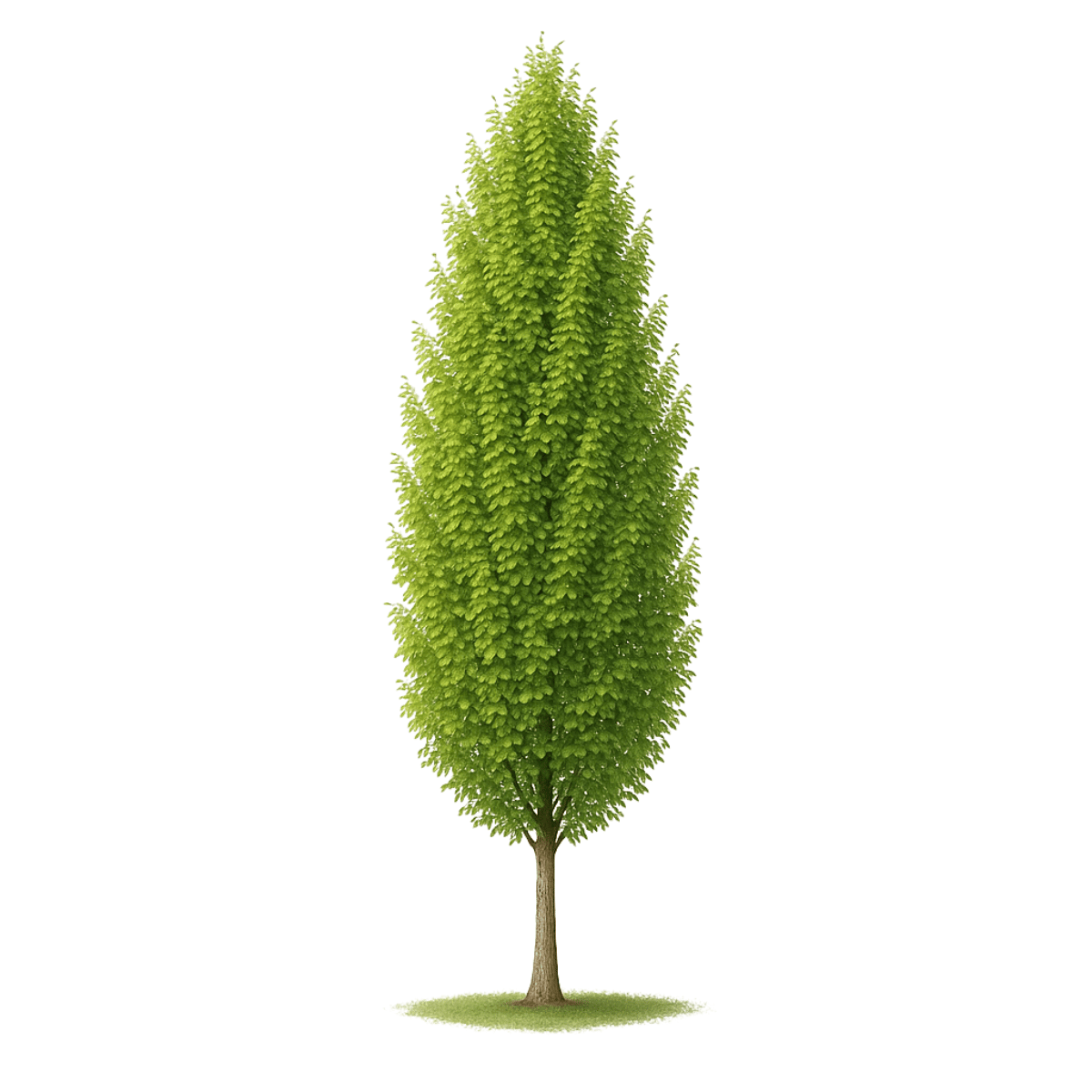
Description
Description
- Height and Spread: ‘Franz Fontaine’ typically matures to 35 to 40 feet tall with a very narrow spread of about 15 feet. Its tight, columnar habit makes it ideal for restricted spaces, hedging, or formal plantings.
- Leaves: The foliage emerges a fresh green in spring, deepens to a rich, dark green through summer, and shifts to golden-yellow tones in fall before dropping. The leaves are ovate with fine serrations, contributing to a refined texture.
- Flowers: Small, inconspicuous catkins appear in spring. While not ornamental, they provide seasonal authenticity and support pollinators.
- Fruit: Small nutlets develop in clusters with leaf-like bracts. Though not showy, they offer subtle seasonal interest and ecological value.
- Growth Habit: Dense, columnar, and strongly upright, ‘Franz Fontaine’ maintains its narrow shape with little to no pruning, making it an excellent choice for formal or space-conscious designs.
Habitat and Cultivation
- Native Range and Adaptability: As a cultivar of the European hornbeam (Carpinus betulus), ‘Franz Fontaine’ is adaptable across USDA zones 5 through 8. It performs reliably in a wide range of climates and is especially valued in urban settings for its tolerance to pollution and compact growth.
- Soil and Sunlight: Prefers moist, well-drained soils but adapts to a variety of soil conditions, including heavier clay soils. It thrives in full sun to partial shade.
- Watering: Requires regular watering during establishment. Once mature, it has moderate drought tolerance but benefits from consistent moisture in dry periods.
Care and Maintenance
- Pruning: Minimal pruning is needed due to its naturally tight, upright habit. Light shaping or removal of dead or damaged branches is best done in late winter or early spring.
- General Care: Resistant to most pests and diseases, it is considered a hardy, low-maintenance tree in managed landscapes.
Landscaping Use
- With its elegant, narrow form, the ‘Franz Fontaine’ Hornbeam is ideal for urban gardens, street plantings, courtyards, and formal designs where vertical accent is desired.
- It works beautifully as a specimen tree, in rows to create a living architectural screen, or as a refined alternative to columnar oaks and maples. Its year-round structure, adaptability, and minimal maintenance needs make it a staple in both residential and commercial landscapes.


 @whiteoakgardens
Reviews
Leave a Review See What Customers Are SayingThere are no reviews yet.