



When you see a butterfly floating from flower to flower, you’re actually witnessing the final chapter of an incredible journey. Before those colorful wings ever take flight, every butterfly goes through one of nature’s most fascinating transformations.
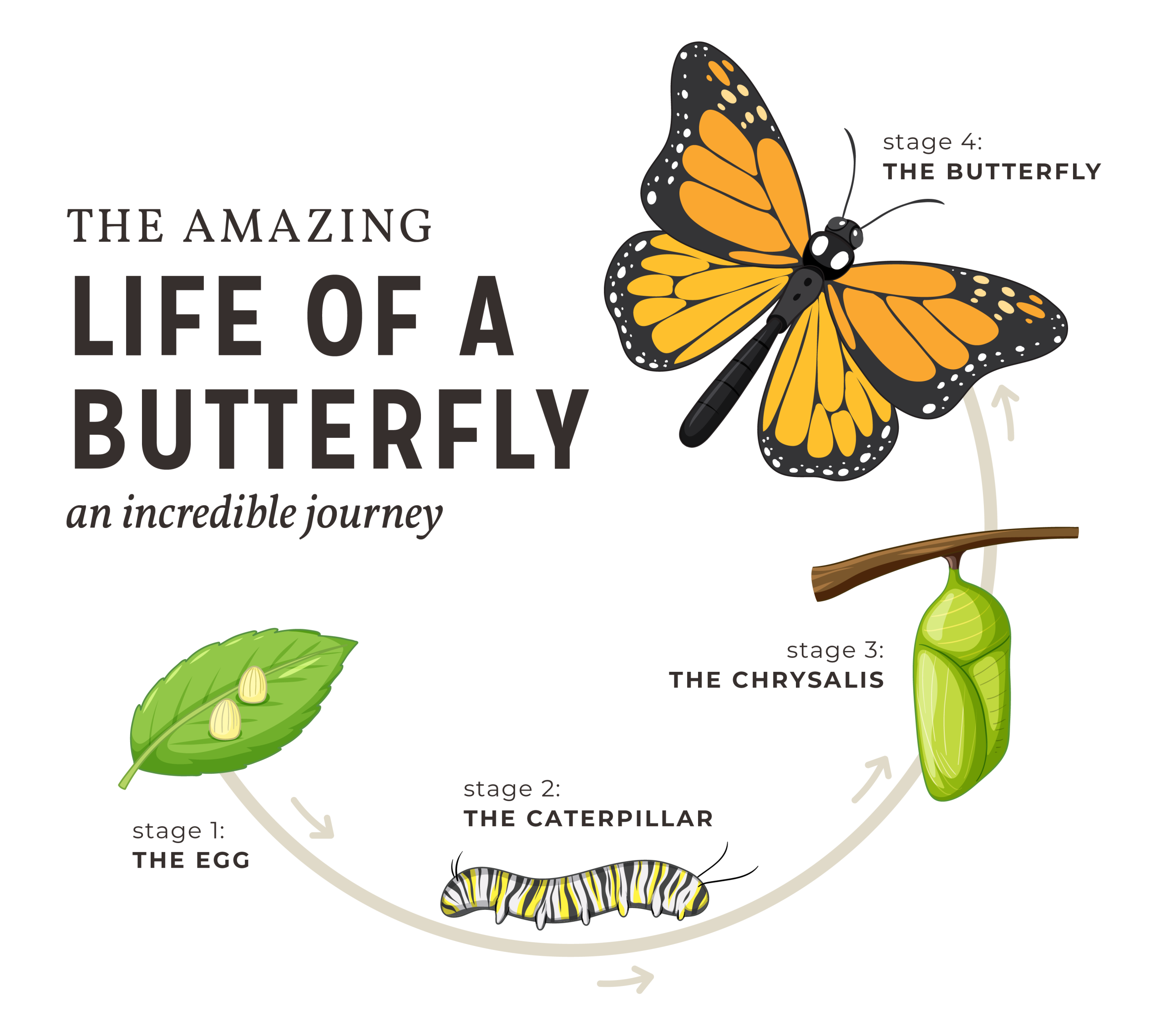
Stage 1:
The Egg
Every butterfly begins as a tiny egg, carefully laid on a specific host plant. Female butterflies don’t choose just any leaf. They select the exact plant their caterpillars will need to eat once they hatch.
For example, Monarch butterflies lay their eggs exclusively on milkweed because it’s the only plant their caterpillars can survive on.
Stage 2:
The Caterpillar
After a few days, the egg hatches into a caterpillar whose main job is simple: eat.
A lot.
Caterpillars spend nearly all of their time feeding and growing. As they grow larger, they shed their skin several times before they’re ready for the next stage.
While gardeners sometimes worry about chewed leaves, those bites are actually a sign your garden is supporting wildlife.
Stage 3:
The Chrysalis
Once fully grown, the caterpillar attaches itself to a branch or stem and forms a chrysalis.
Inside, something remarkable happens.
The caterpillar completely transforms. Over the next week or two, its body reorganizes into the butterfly it will become. It’s one of nature’s greatest examples of metamorphosis.
Stage 4:
The Butterfly
When the butterfly finally emerges, its wings are soft and folded. It pumps fluid through the wing veins, allowing them to expand and harden before taking its first flight.
Now its job changes.
Instead of eating leaves, butterflies sip nectar from flowers while pollinating plants and, eventually, finding a mate to begin the cycle all over again.
How You Can Help Butterflies
Creating a butterfly-friendly garden means providing everything they need throughout their lives—not just nectar.
Plant host plants where butterflies can lay eggs and caterpillars can feed.
-
Milkweed for Monarchs
-
Parsley, dill, and fennel for Black Swallowtails
-
Violets for Fritillaries
Plant nectar-rich flowers for adult butterflies.
-
Coneflower
-
Liatris
-
Joe Pye Weed
-
Agastache
-
Butterfly Bush
-
Verbena bonariensis
-
Asters
Skip broad-spectrum insecticides. They don’t distinguish between harmful insects and beneficial ones like butterflies and their caterpillars.
Leave a little nature alone. Not every leaf needs to be perfect. Those tiny chew marks often mean your garden is helping the next generation of butterflies take flight.
Every Garden Can Make a Difference
A butterfly’s life may only last a few weeks as an adult, but every flower, every host plant, and every safe place to grow helps continue an extraordinary cycle that has repeated for millions of years.
The next time you see a butterfly drifting through your garden, remember—it didn’t just arrive there. It grew there.


 @whiteoakgardens