



Description
Description
- Height and Spread: Tulip Tree typically matures to 70 to 90 feet tall with a spread of 35 to 50 feet, though exceptional specimens can exceed 120 feet. It develops a strong central leader and a broadly pyramidal to oval crown as it matures.
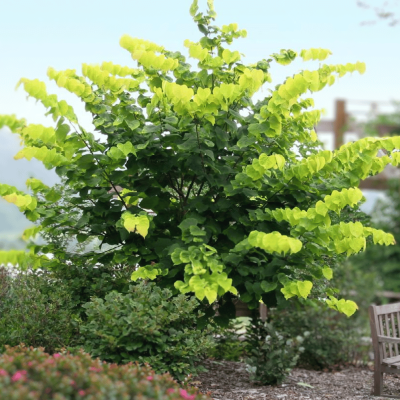
- Leaves: Large, uniquely shaped leaves resemble tulip flowers, with four distinct lobes and a bright green color in summer. In autumn, they turn a brilliant golden-yellow, creating an impressive seasonal display.
- Flowers: In late spring to early summer, tulip-shaped, greenish-yellow flowers with orange centers appear high in the canopy. Though not always easily visible from the ground, they are striking up close and provide nectar for pollinators such as bees and hummingbirds.
- Fruit: Cone-like clusters of winged seeds (samaras) develop after flowering, ripening in fall and often persisting into winter. They provide food for wildlife, including birds and squirrels.
- Growth Habit: Tall and straight, with a strong central trunk and symmetrical branching. Known for its rapid growth rate, often 2 to 3 feet per year in youth.
Habitat and Cultivation
- Native Range and Adaptability: Native to the eastern United States, from the Great Lakes to the Gulf Coast. Thrives in USDA zones 4 through 9 and is commonly found in rich, moist forests.
- Soil and Sunlight: Prefers deep, fertile, well-drained soils with consistent moisture. Performs best in full sun but tolerates light shade.
- Watering: Requires regular watering during establishment. Benefits from supplemental watering during hot, dry summers to maintain vigor and leaf quality.
Care and Maintenance
- Pruning: Minimal pruning is required, typically limited to removing lower branches to raise the canopy or removing deadwood. Best pruned in late winter while dormant.
- General Care: Relatively pest- and disease-resistant but may be susceptible to aphids, which can cause honeydew and sooty mold. Best suited to large, open landscapes where its size can be accommodated.
Landscaping Use
- With its tall stature, fast growth, and distinctive foliage, the Tulip Tree is an excellent choice for use as a shade tree in parks, large lawns, and expansive landscapes.
- Its golden fall color, unique leaves, and spring flowers add ornamental interest, while its nectar and seeds provide ecological benefits for pollinators and wildlife. For properties with ample space, the Tulip Tree offers grandeur, beauty, and environmental value.



 @whiteoakgardens
Reviews
Leave a Review See What Customers Are SayingThere are no reviews yet.