



Description
Description
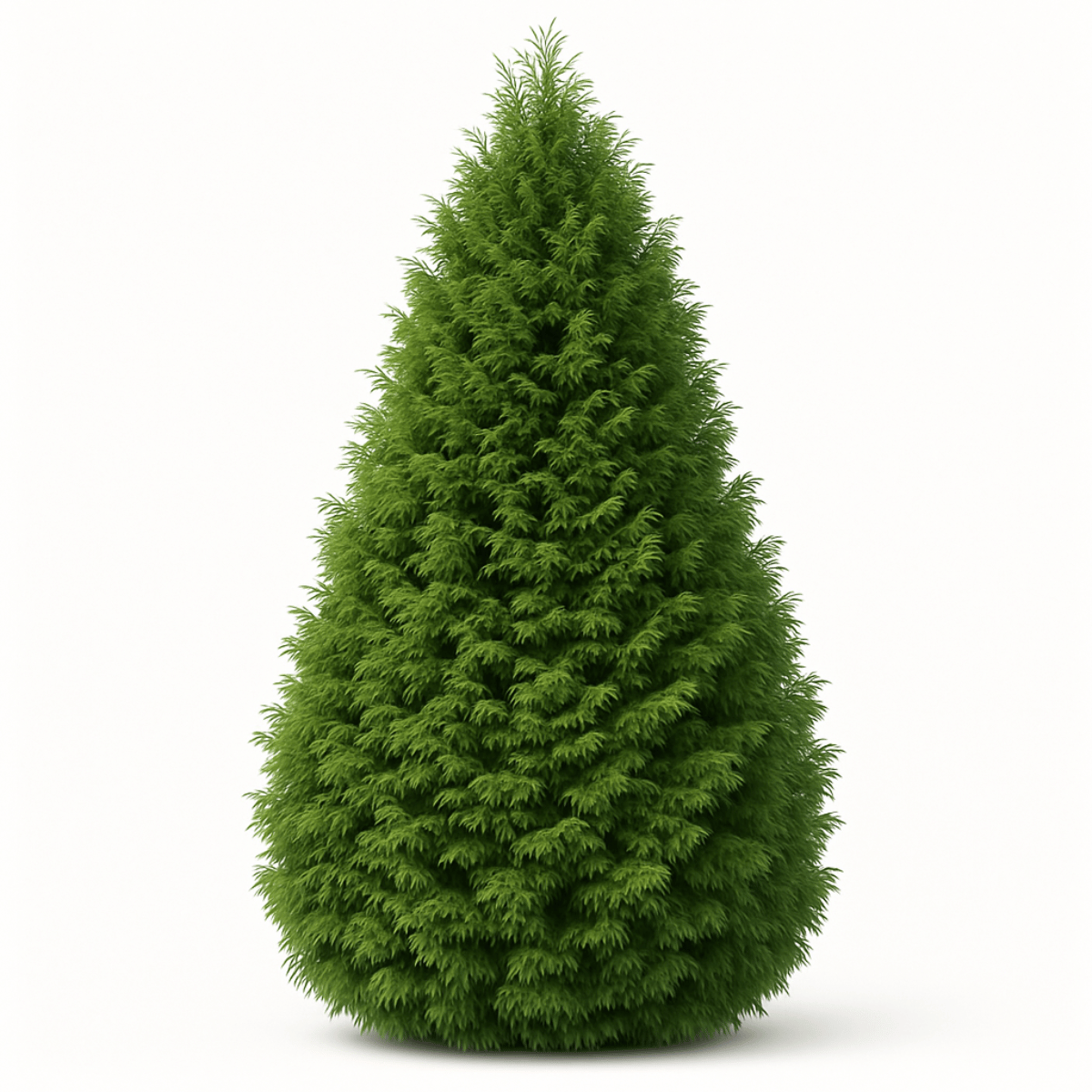
- Height and Spread: Green Giant Arborvitae typically matures to 40 to 60 feet tall with a spread of 12 to 18 feet, though it can grow taller under optimal conditions. Its strong, pyramidal form makes it both elegant and functional as a landscape tree.
- Leaves: Lustrous, scale-like foliage is rich green year-round, with little to no bronzing in winter. The dense foliage maintains its color and fullness even in cold climates.
- Flowers: Produces small, inconspicuous yellow-green flowers in spring. These are not ornamentally significant.
- Fruit: Small, oblong cones about ½ inch long develop after flowering, maturing to brown. While not showy, they provide seasonal authenticity.
- Growth Habit: Uniformly dense, upright, and pyramidal, with a strong central leader. Known for its rapid growth rate, often 3 feet per year in youth.
Habitat and Cultivation
- Native Range and Adaptability: A hybrid between Japanese arborvitae (Thuja standishii) and Western redcedar (Thuja plicata), Green Giant is hardy in USDA zones 5 through 8. It is widely adaptable across the United States and performs well in both residential and commercial landscapes.
- Soil and Sunlight: Prefers moist, well-drained soils but tolerates a wide range of conditions, including clay and poor soils. Grows best in full sun to partial shade.
- Watering: Requires regular watering during establishment. Once mature, it is moderately drought-tolerant but grows best with consistent soil moisture.
Care and Maintenance
- Pruning: Minimal pruning is required to maintain form, though it can be lightly sheared if used in formal hedges. Best pruned in late spring to early summer.
- General Care: Resistant to deer browsing, bagworms, and most serious pests and diseases. Its durability and adaptability make it one of the lowest-maintenance choices for evergreen screening.
Landscaping Use
- With its rapid growth, dense foliage, and strong form, the Green Giant Arborvitae is an outstanding choice for privacy screens, windbreaks, and year-round evergreen structure.
- It works equally well as a single specimen, in staggered groupings, or in long rows to create a living wall. Its fast growth and disease resistance make it one of the most popular evergreen trees for both residential and large-scale landscapes.



 @whiteoakgardens
Reviews
Leave a Review See What Customers Are SayingThere are no reviews yet.