



The cut-tree season is officially here, and we’re ready to help you take home your perfect tree with delivery and setup options designed to make things easy and enjoyable.

Black Hills Spruce
Where it grows:
Native to the Dakotas, Wyoming, and into the northern Great Plains, especially the Black Hills region of South Dakota — hence the name.
History & fun facts:
-
A naturally compact form of Colorado Spruce, chosen for its cold tolerance and dense branching.
-
Indigenous tribes used the resin for medicine and waterproofing.
-
It’s one of the toughest spruces, surviving harsh winters and winds.
Why it works as a Christmas tree:
Its slow, steady growth results in very dense branches and a tidy, pyramid shape. Stiff branches hold heavier ornaments well, and the needles stay on for a long time. Light scent, very classic look.

Blue Spruce
Where it grows:
Native to the Rocky Mountains — Colorado, Utah, Wyoming, and New Mexico — where it grows on cool, high-elevation slopes.
History & fun facts:
-
State tree of Colorado and Utah.
-
Famous for its striking blue-silver needles; the color actually comes from a wax coating that helps the tree tolerate mountain winds and cold.
-
Frequently used for large public Christmas displays because it stays full and holds shape extremely well.
Why it works as a Christmas tree:
Strong, rigid branches make it one of the best trees for heavy ornaments. Needles can be prickly, but they stay on the tree for weeks. Mild evergreen scent.

Canaan Fir
Where it grows:
Originates from isolated pockets of West Virginia and the Appalachian Mountains — a natural hybrid zone between Fraser and Balsam Fir.
History & fun facts:
-
Long overlooked because it was hard to reach in the wild, it became popular when growers realized how adaptable it is.
-
Has the fragrance of Balsam Fir but grows more reliably in varied climates like Ohio.
-
Known for its “best-of-both-worlds” traits.
Why it works as a Christmas tree:
Soft needles, strong fragrance, great needle retention, and a slightly open shape that’s easy to decorate. A perfect fir for Midwest climates.

Concolor Fir (White Fir)
Where it grows:
Native to the western U.S. — California, Nevada, Utah, Colorado, and New Mexico — typically in higher mountain ranges.
History & fun facts:
-
Sometimes called “the citrus tree” of Christmas — people often say it smells like oranges, lemons, or tangerines.
-
Long-lived species; some concolor firs have been dated to over 300 years.
-
Needles grow in a soft, blue-green curve, giving it a unique look.
Why it works as a Christmas tree:
Soft, silvery-blue needles and a refreshing scent make it a standout. Branches are moderately strong — good for standard ornaments. Excellent needle retention.
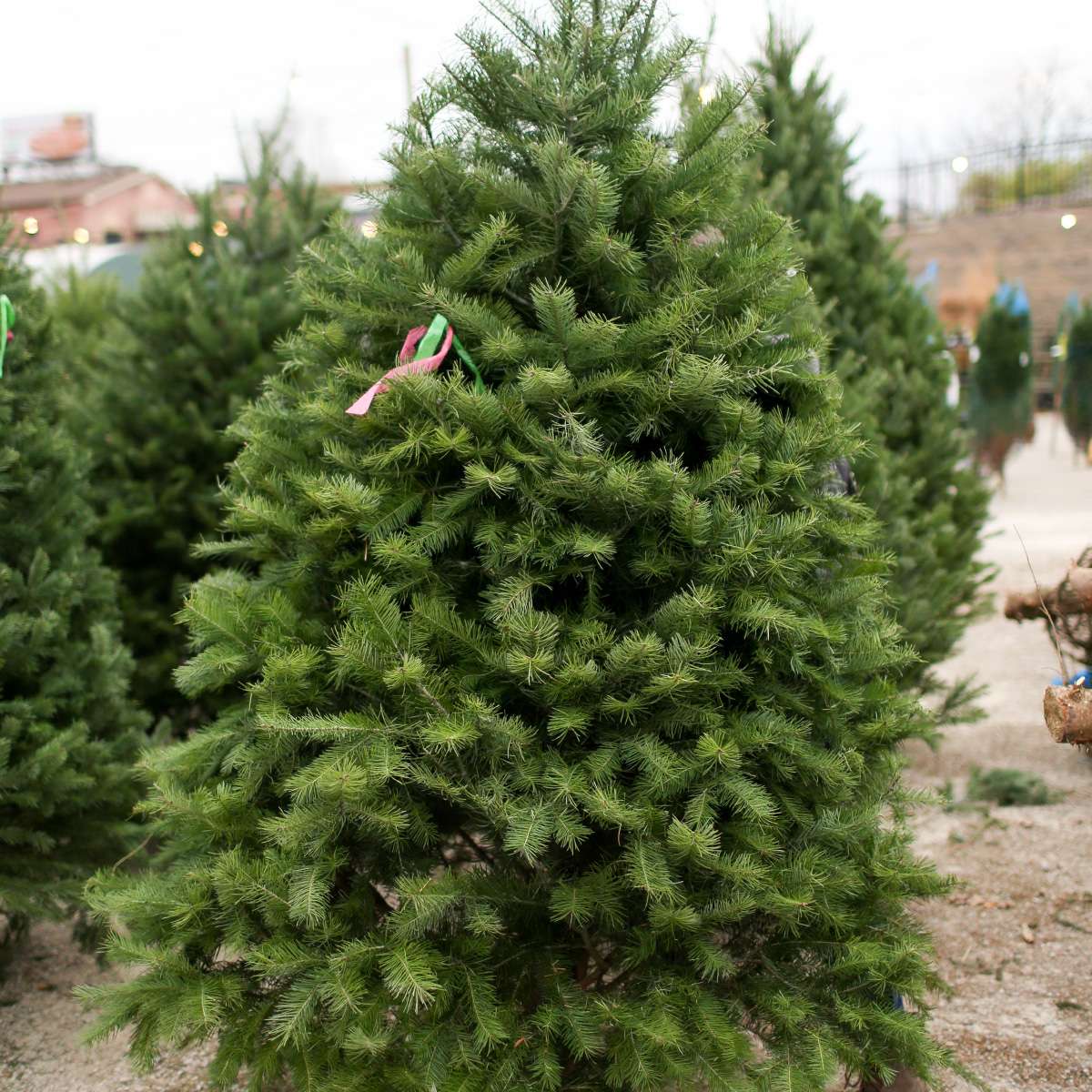
Douglas Fir
Where it grows:
Native to the Pacific Northwest — Oregon, Washington, northern California, and parts of British Columbia.
History & fun facts:
-
One of the top-selling Christmas trees in the U.S. for decades.
-
Early pioneers used its wood for everything: ships, homes, railroads.
-
It’s not a true fir; it belongs to its own genus, Pseudotsuga.
Why it works as a Christmas tree:
Full, fluffy, soft, and beautifully green. Famous for its sweet evergreen fragrance. Great for families who love a traditional, lush tree.

Fraser Fir
Where it grows:
Native to the highest elevations of the Appalachian Mountains — North Carolina, Virginia, and Tennessee.
History & fun facts:
-
Widely considered America’s “premium Christmas tree.”
-
Used in the White House almost every year.
-
Silver undersides of the needles give it a subtle two-tone glow.
Why it works as a Christmas tree:
Excellent needle retention, strong branches, and perfect shape. Soft needles make it kid-friendly. Beautiful fragrance — not overpowering, just classic Christmas.

Grand Fir
Where it grows:
Native to the Northwest — Oregon, Washington, northern California, and western Montana.
History & fun facts:
-
Known for having one of the strongest natural evergreen scents of any Christmas tree.
-
Indigenous groups used it for medicine and cleansing rituals.
-
Needle layout is very flat and shiny — almost “showy.”
Why it works as a Christmas tree:
Soft, glossy needles and a big, rich fragrance. Branches are moderately strong — great for lighter to medium ornaments. Very full and elegant.

Nordmann Fir
Where it grows:
Native to the mountains around the Black Sea — Turkey, Georgia, and parts of Russia.
History & fun facts:
-
Extremely popular in Europe; often the #1 Christmas tree in the UK and Germany.
-
Needles stay flexible and don’t shed easily — even as the tree dries.
-
Glossy needles contain very little fragrance, which many allergy-sensitive households love.
Why it works as a Christmas tree:
Soft, shiny needles, layered branch structure, and unmatched needle retention. Minimal mess, clean look, mild scent.
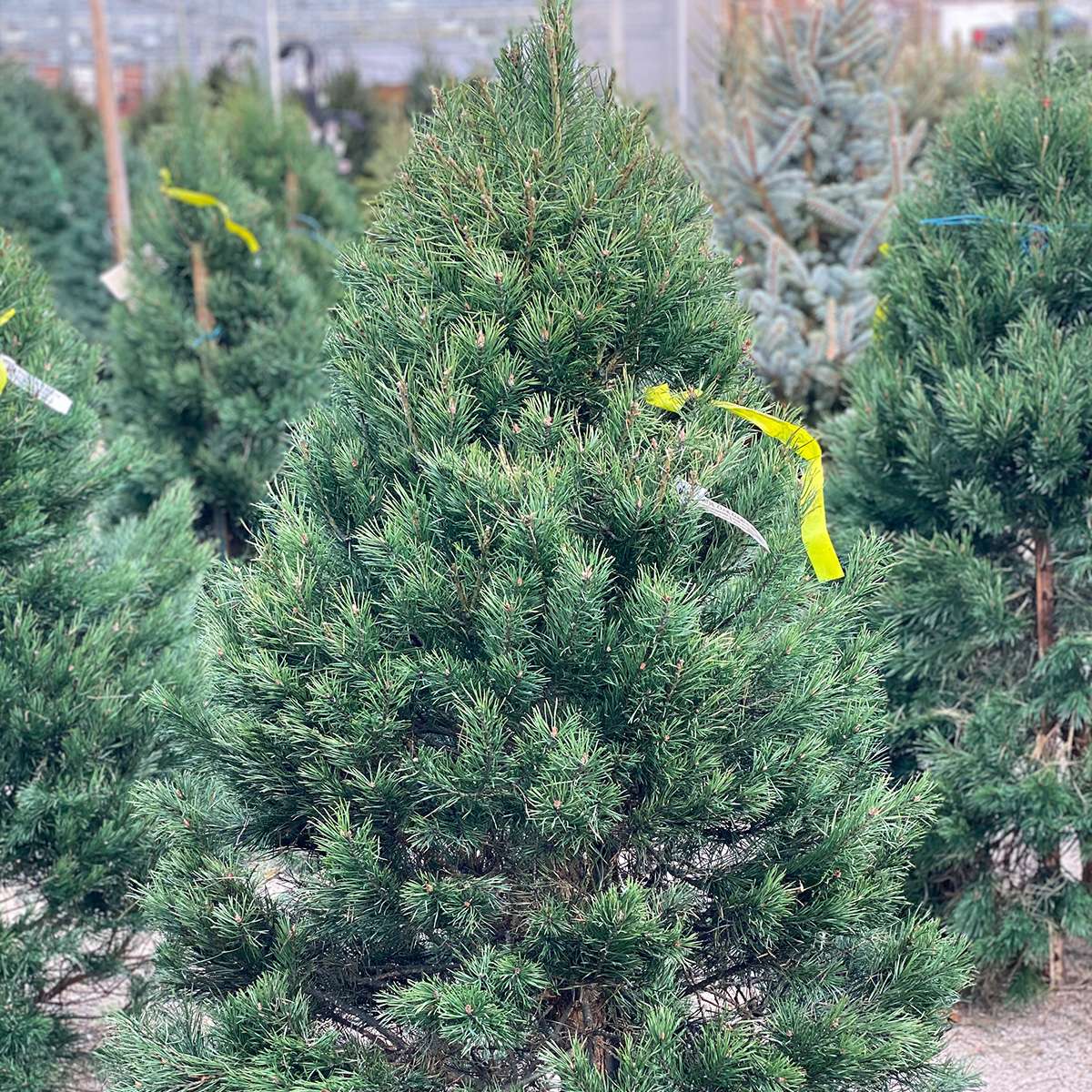
Scotch Pine
Where it grows:
Native to Europe and Asia; one of the most widely planted pines in the world. Naturalized throughout the Midwest and Northeast.
History & fun facts:
-
One of the first species grown commercially for Christmas trees in the U.S.
-
Known for retaining needles even after it’s dry — the “won’t shed” pine.
-
Used extensively in reforestation because it grows fast and tolerates poor soils.
Why it works as a Christmas tree:
Stiff branches, great longevity, and classic bright-green color. Works beautifully for heavy ornaments. Light pine scent.

White Pine
Where it grows:
Native from Minnesota across the Great Lakes, into Appalachia, and up through New England.
History & fun facts:
-
Used heavily for masts on early ships — very straight and tall.
-
Needles grow in bundles of five, giving it that soft, feathery texture.
-
One of the tallest native trees in eastern North America.
Why it works as a Christmas tree:
Soft, graceful needles and a delicate look. Best for lightweight ornaments or a minimalist, natural style. Very mild fragrance.
christmas tree services
Christmas Tree Setup Service
Let us take the work out of getting your Christmas tree ready for the season. Our Christmas Tree Setup service includes delivery, a fresh cut at the base, secure placement of your tree in its stand, and careful setup inside your home – complete with water added to the stand.
Setup is priced at our standard delivery fee (based on zip code) plus 40% of the tree’s original price.
After purchasing your tree and setup service, a member of our Nursery team will call within a few days to schedule your appointment. Please note that setup spots fill on a first-come, first-served basis.
A quality tree stand is required for safe setup (not provided by White Oak Gardens) – we carry reliable, sturdy stands in-store if you need one. Décor and tree removal are not included.
Christmas Tree Delivery
We’re happy to deliver any cut Christmas tree purchased at White Oak Gardens. Delivery fees are based on your zip code and follow our standard delivery rates. Your tree will arrive freshly cut at the base, netted, and placed at your driveway or front door.
Please note: delivery does not include indoor setup. If you’d like help bringing your tree inside and setting it in your stand, we offer a separate Christmas Tree Setup service that can be scheduled in advance.


 @whiteoakgardens