



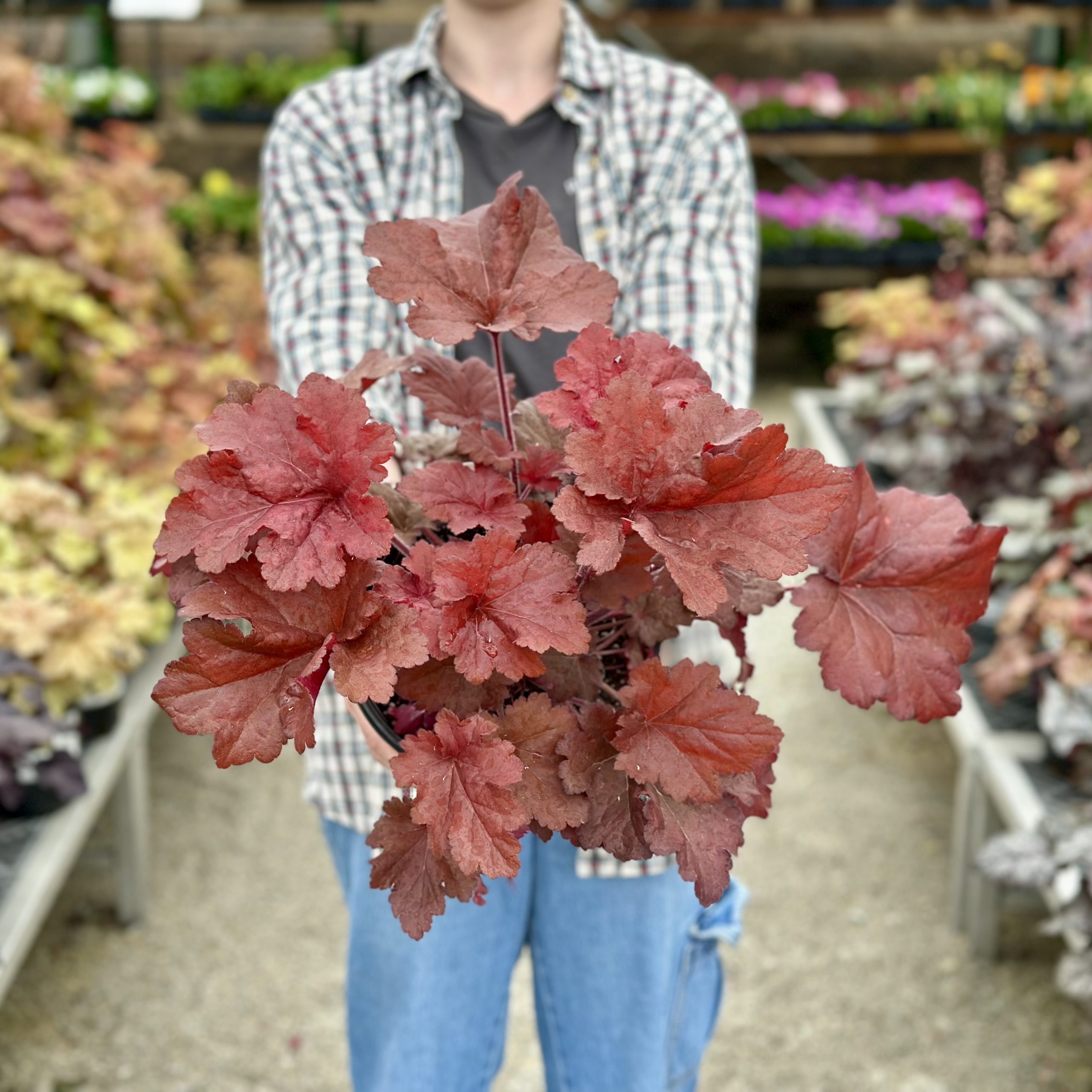
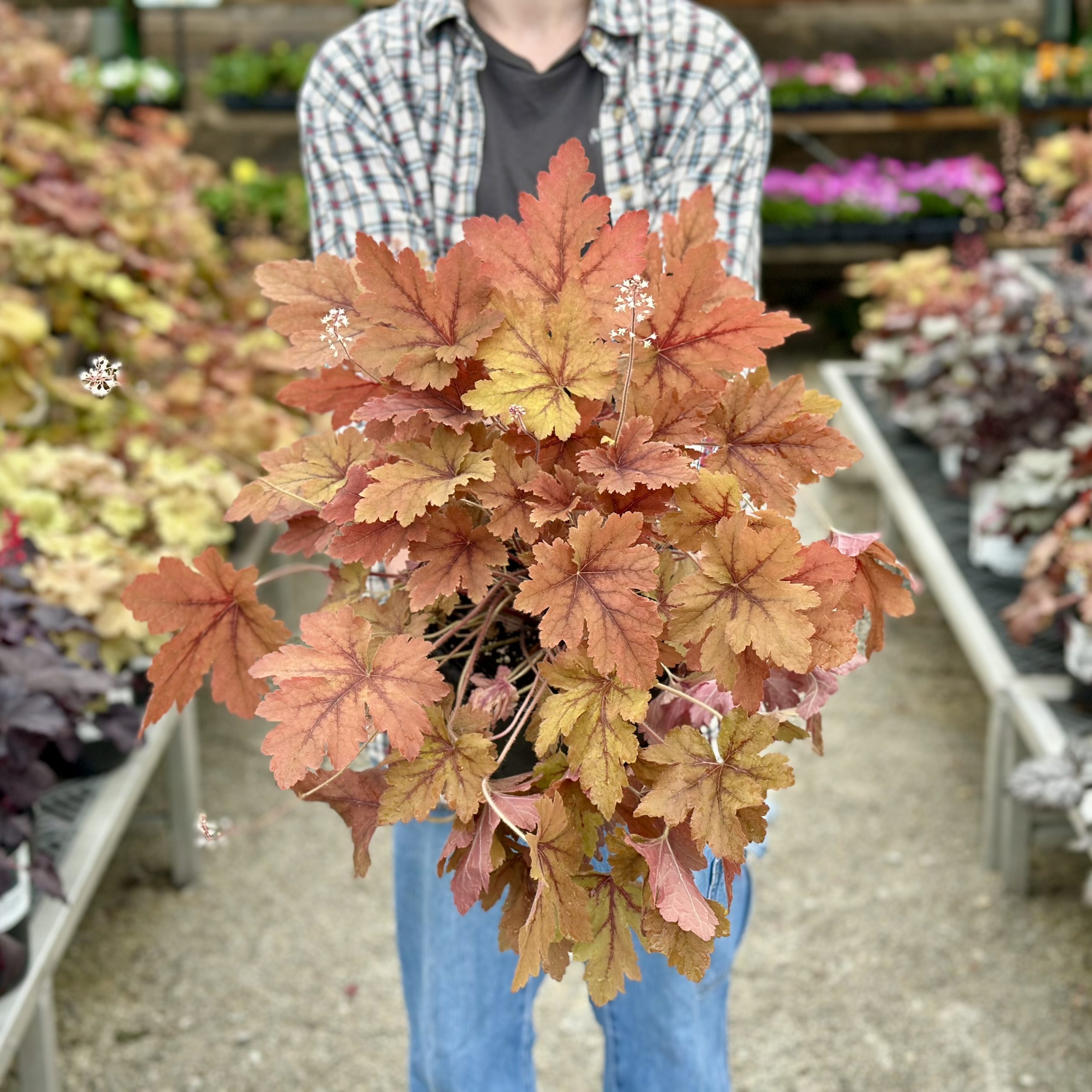
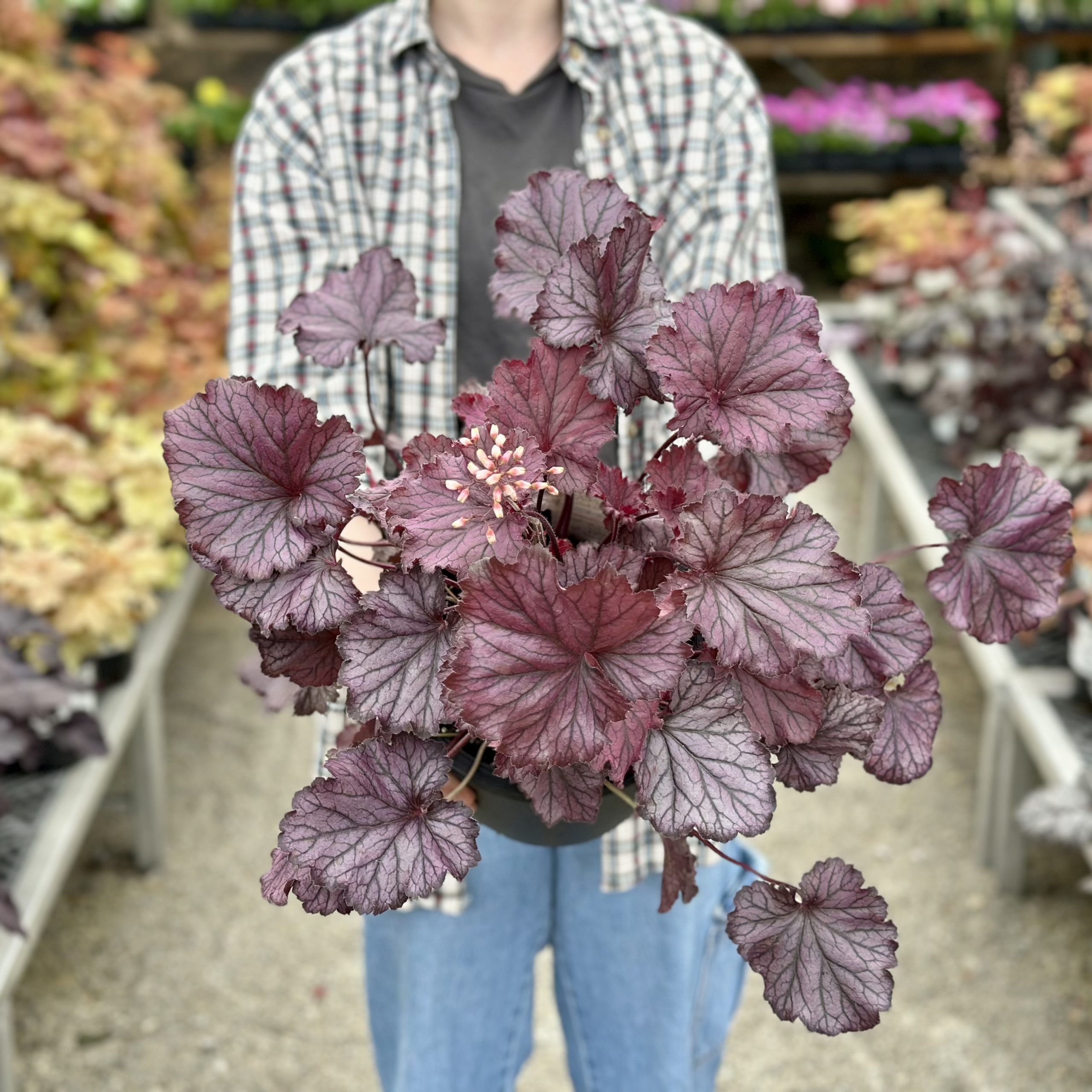
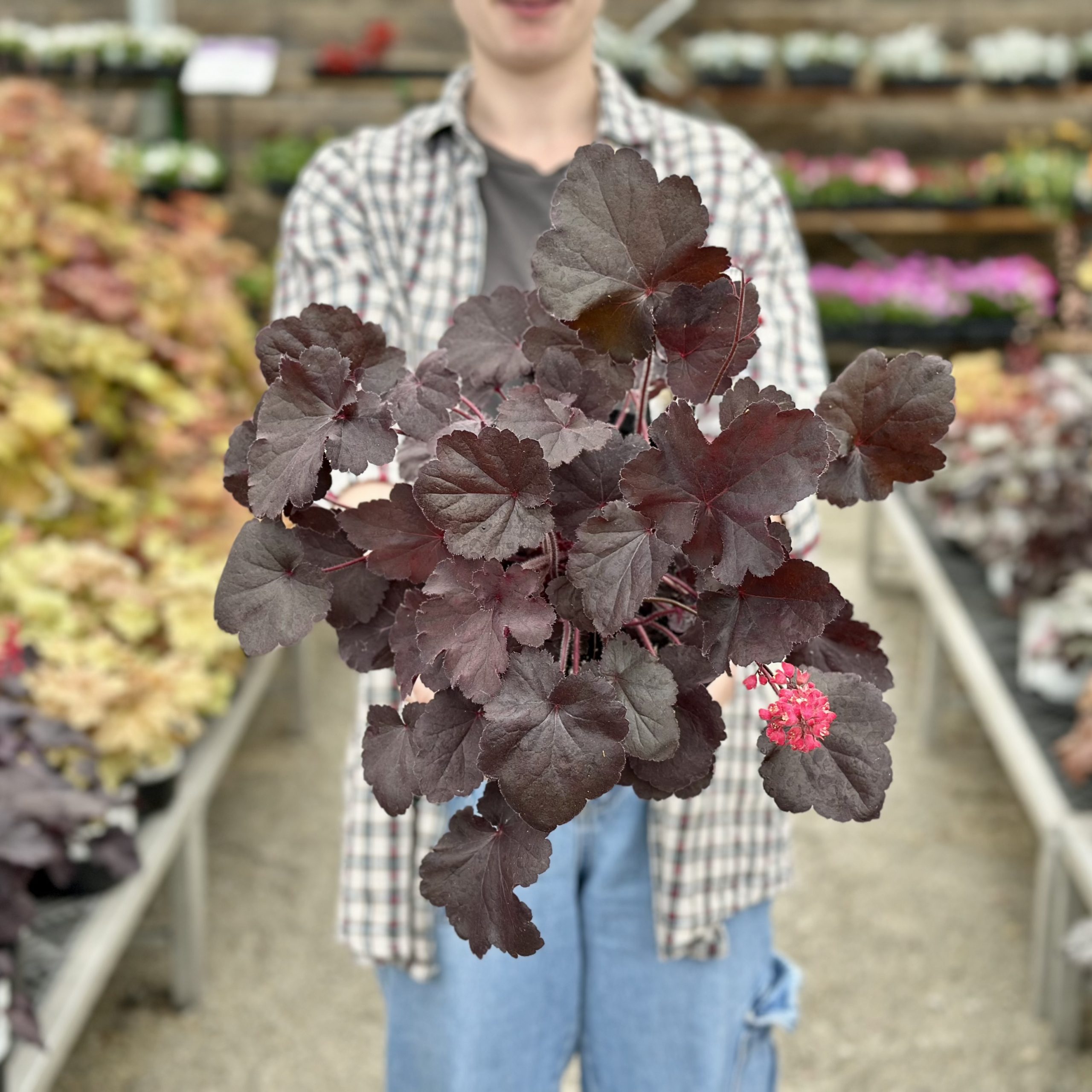
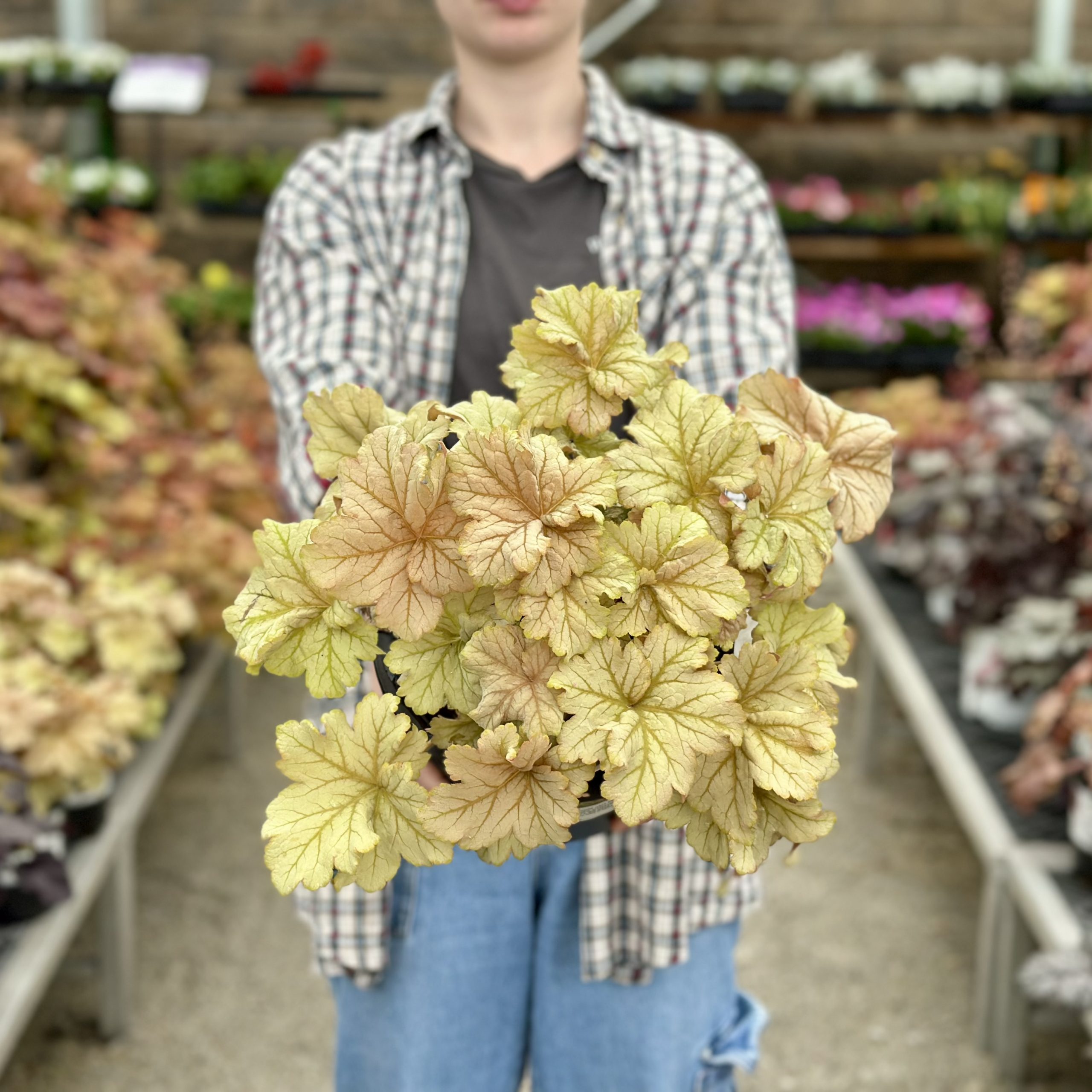
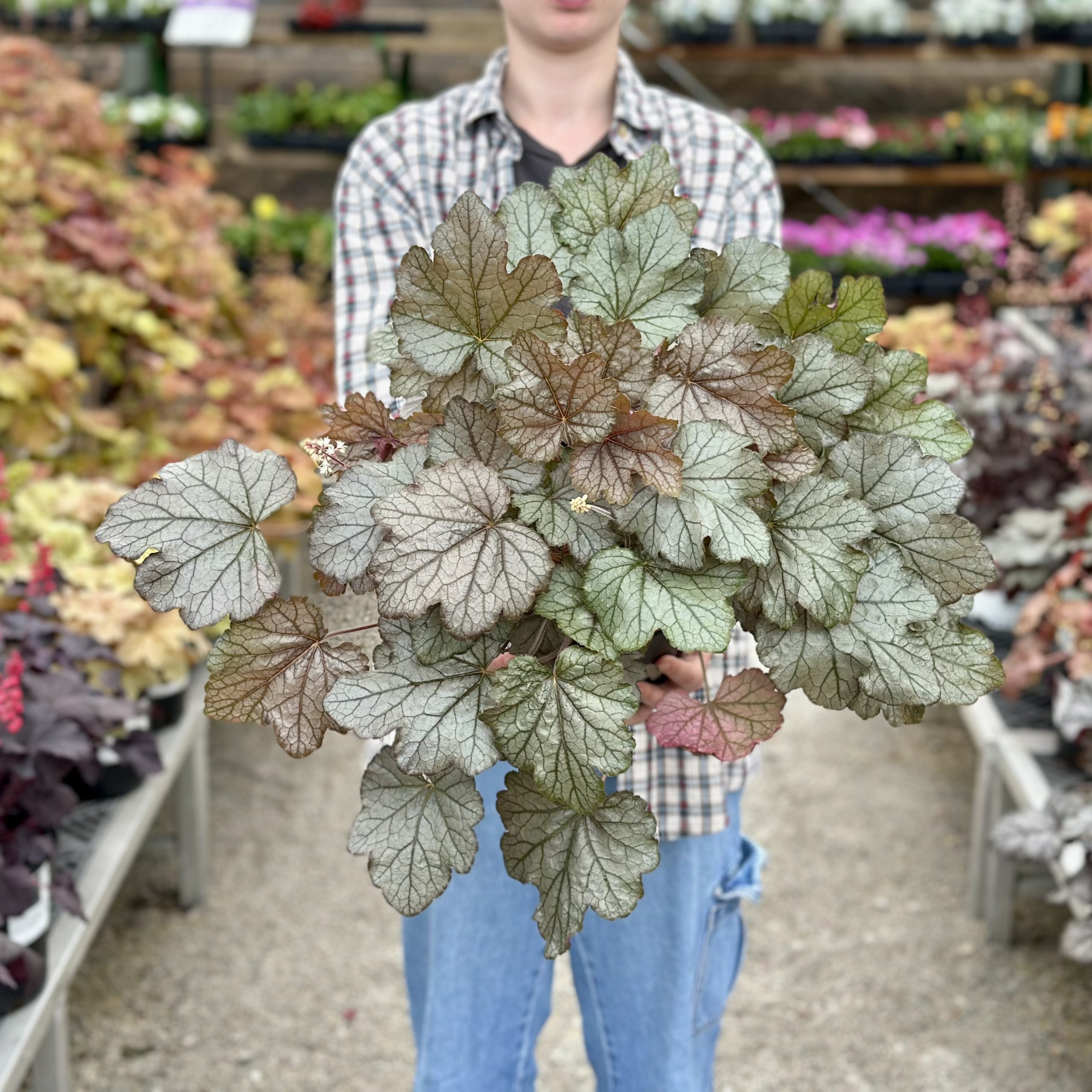
Native to North America, Coral Bells were originally grown for their delicate, bell-shaped flowers. Over time, plant breeders fell in love with the foliage—and for good reason. Today’s hybrids are prized for their stunning leaves, which come in an incredible range of colors, from deep burgundy and pewter silver to lime green, caramel, peach, and even almost-black.
They’re a fantastic way to add long-lasting color and texture to your garden beds, especially in those tricky shady spots where flowering plants often struggle.
Why Coral Bells Belong in Every Garden
There’s a reason Coral Bells are a favorite among landscape designers and home gardeners alike. Here are just a few of the things that make them special:
1. Foliage That Never Quits
Their leaves are the real stars—bold, ruffled, veined, and rich in color. And unlike many flowering plants, Coral Bells offer months of color without a bloom in sight.
2. Great for Shade (But Not Too Much)
They thrive in partial shade and can tolerate full sun in cooler climates. In hotter regions, they appreciate a bit of afternoon protection. This makes them incredibly versatile in the garden.
3. Easy to Grow and Maintain
Once established, Coral Bells are drought-tolerant, pest-resistant, and require little care beyond seasonal cleanup. They’re also typically deer- and rabbit-resistant—a major plus for wildlife-prone areas.
4. Pollinator Friendly
While the foliage is the main attraction, Coral Bells send up slender flower spikes in late spring to summer that attract hummingbirds, bees, and butterflies.
5. Excellent for All Garden Styles
Whether you’re growing a formal border, woodland garden, or a container collection on your patio, Coral Bells can fit in beautifully.
Planting & Care Tips
Getting the most out of your Coral Bells is easy with a few simple tips:
- Soil: Well-draining soil is essential. While they’re not overly fussy, soggy roots can lead to rot.
- Light: In most climates, morning sun and afternoon shade work best. In cooler zones, they can tolerate more direct sun.
- Watering: Water regularly during their first season to help roots establish. After that, they’re fairly drought-tolerant.
- Mulching: A layer of mulch helps retain moisture and keep roots cool.
- Dividing: Every 3–4 years, divide clumps in early spring or fall to keep them vigorous and full.

Companion Planting Ideas
Coral Bells make excellent companions for:
- Hostas
- Ferns
- Astilbe
- Brunnera
- Heucherella (a hybrid cousin)
- Spring bulbs like daffodils or tulips


 @whiteoakgardens